Korean Bibimbap
Highlighted under: Inspired Collection
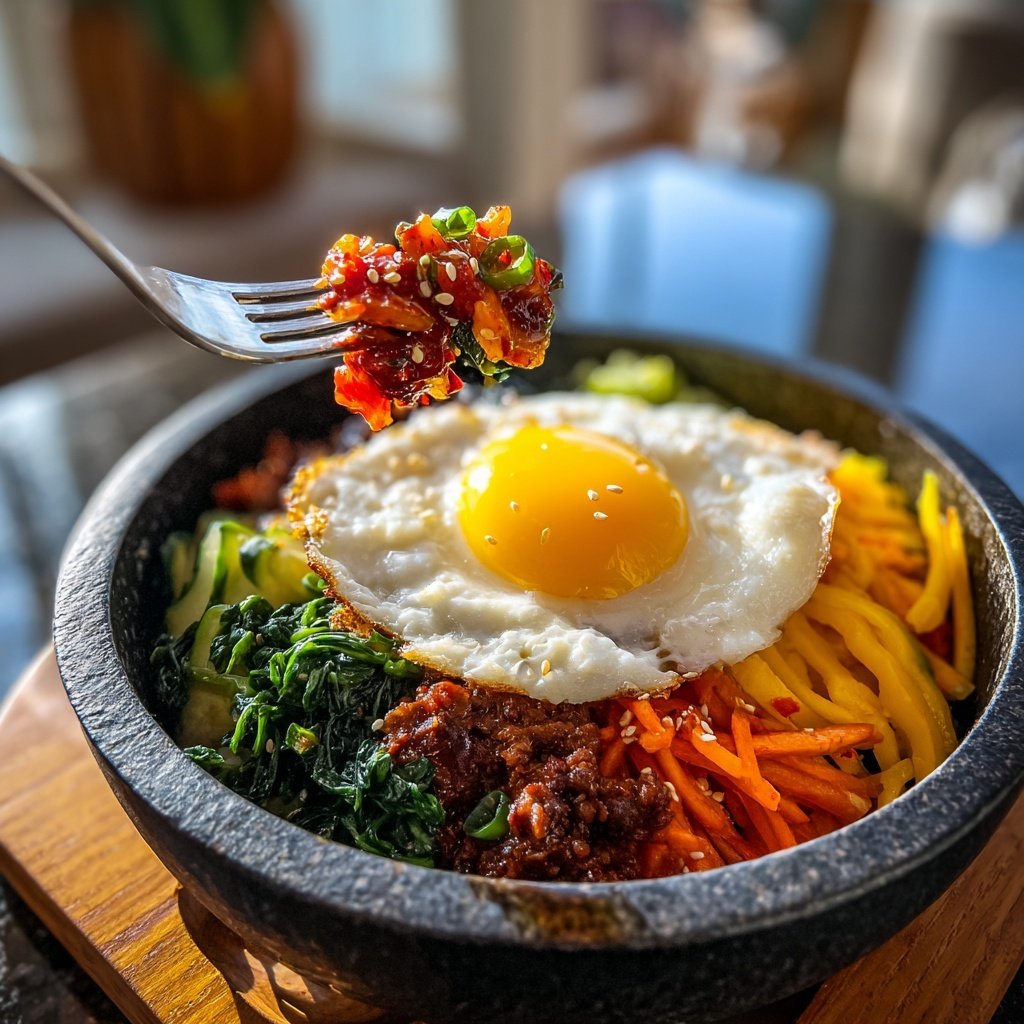
Korean Bibimbap is a vibrant and nutritious dish that combines rice with a variety of vegetables, meat, and a rich gochujang sauce.
Korean Bibimbap is a beloved dish known for its colorful presentation and harmonious blend of flavors. This meal is not only a feast for the eyes but also a wholesome option packed with nutrients.
Why You'll Love This Recipe
- A beautiful array of colors and textures that make each bite exciting
- Nutritious and customizable to fit any dietary preference
- Deliciously spicy with the perfect kick from gochujang
The History of Bibimbap
Bibimbap, which translates to 'mixed rice,' is a traditional Korean dish that dates back to the 16th century. It was originally a meal consumed by farmers, made from leftover ingredients and served as a way to utilize surplus produce. Over time, it has evolved into a beloved staple in Korean cuisine, known for its vibrant colors and nutritional balance.
The dish is often served in a hot stone bowl, known as 'dolsot,' which creates a crispy layer of rice at the bottom. This method not only enhances the flavor but also adds a delightful texture to the meal. Bibimbap is versatile, allowing for various ingredients based on seasonality and personal preference, making it a dish that can be enjoyed year-round.
Nutritional Benefits
Korean Bibimbap is not only visually appealing but also packed with nutrients. The combination of vegetables provides a rich source of vitamins, minerals, and antioxidants. Spinach contributes iron and calcium, while carrots and zucchini are high in fiber and vitamins A and C. This colorful medley ensures you're getting a well-rounded meal in just one bowl.
Adding protein is easy with Bibimbap; the beef offers a hearty, satisfying element that also supplies essential amino acids. For those following a vegetarian or vegan lifestyle, tofu or tempeh can be used as a delicious alternative. This adaptability makes Bibimbap an excellent choice for anyone looking to maintain a healthy diet without sacrificing flavor.
Tips for Customization
One of the best things about Bibimbap is its customization potential. You can easily swap out ingredients based on what you have on hand or your dietary preferences. For instance, substitute chicken, pork, or mushrooms for the beef, or replace traditional vegetables with seasonal options like bell peppers or sweet potatoes.
For a vegan version, omit the eggs and use plant-based proteins while keeping the gochujang sauce for that signature spicy kick. Don’t hesitate to experiment with different sauces and garnishes; a drizzle of sesame oil or a sprinkle of crushed chili flakes can elevate the dish even further. The key is to balance flavors and textures to create a satisfying meal.
Ingredients
Gather the following ingredients to prepare your delicious Korean Bibimbap:
For the Bibimbap
- 2 cups cooked white rice
- 1 cup spinach, blanched
- 1 cup carrots, julienned
- 1 cup zucchini, julienned
- 1 cup bean sprouts, blanched
- 4 eggs
- 200g beef, thinly sliced
- 2 tablespoons gochujang (Korean chili paste)
- 2 tablespoons sesame oil
- 1 tablespoon soy sauce
- Sesame seeds for garnish
- Green onions for garnish
Make sure to have all ingredients ready for a smooth cooking process!
Instructions
Follow these steps to create your Korean Bibimbap:
Prepare the Vegetables
In a pan, sauté the carrots and zucchini separately until tender. Set aside. Blanch the spinach and bean sprouts, then set aside as well.
Cook the Beef
In the same pan, add sesame oil and cook the beef until browned. Season with soy sauce and remove from heat.
Fry the Eggs
Fry the eggs sunny-side up in a separate pan, keeping the yolks runny.
Assemble the Bibimbap
In a bowl, place a serving of rice and arrange the vegetables and beef on top. Add the fried egg in the center.
Serve with Sauce
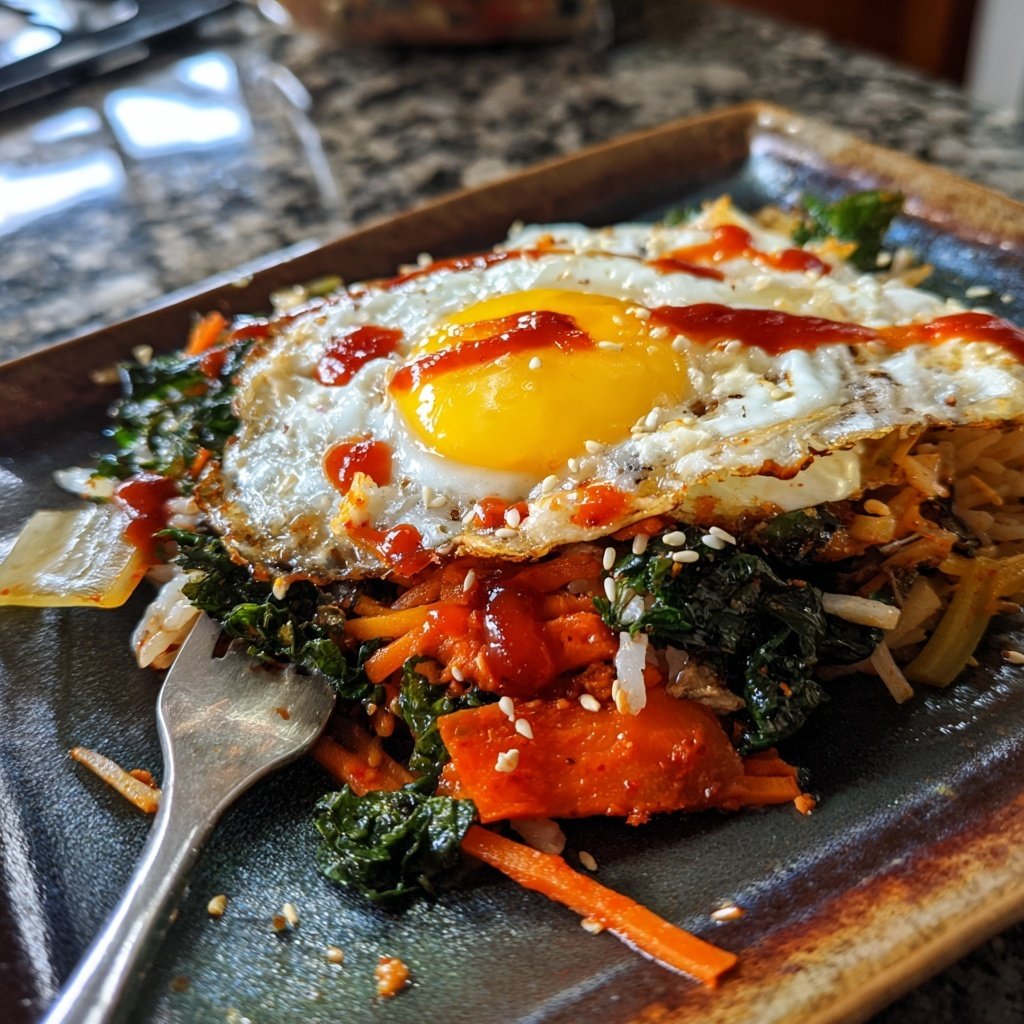
Drizzle gochujang over the top and sprinkle with sesame seeds and green onions. Mix everything together before eating.
Enjoy your delicious homemade Korean Bibimbap!
Pro Tips
- Feel free to customize your Bibimbap with different proteins like chicken or tofu, and add more vegetables according to your preference.
Serving Suggestions
Bibimbap is a versatile dish that can be served as a main course or a side dish. For a well-rounded meal, pair it with a light soup, such as Korean miso soup or a refreshing cucumber salad. The contrast of textures and flavors can enhance your dining experience, making it even more enjoyable.
If you're entertaining, consider serving Bibimbap in individual bowls for each guest. This not only adds a personal touch but also allows everyone to customize their own meal, creating a fun and interactive dining atmosphere.
Storage and Reheating
Leftover Bibimbap can be stored in an airtight container in the refrigerator for up to three days. To maintain the freshness of the vegetables, it's best to keep the components separate until you're ready to eat. When reheating, add a splash of water to the rice before microwaving to prevent it from drying out.
If you prefer a crispy texture, consider reheating your Bibimbap in a skillet over medium heat. This method helps revitalize the rice and keeps the flavors vibrant. Just be sure to stir occasionally to prevent sticking.
Questions About Recipes
→ Can I make Bibimbap vegetarian?
Yes! Simply omit the beef and add more vegetables or tofu.
→ What can I substitute for gochujang?
You can use a mix of chili paste and a bit of sugar as a substitute, but the flavor will vary.
→ How long does Bibimbap last in the fridge?
Bibimbap can last up to 3 days in the refrigerator. Store the components separately for best results.
→ Can I use brown rice instead of white rice?
Absolutely! Brown rice adds more fiber and has a nuttier flavor.
Korean Bibimbap
Created by: Loretta Winslow
Recipe Type: Inspired Collection
Skill Level: Intermediate
Final Quantity: 4 servings
What You'll Need
For the Bibimbap
- 2 cups cooked white rice
- 1 cup spinach, blanched
- 1 cup carrots, julienned
- 1 cup zucchini, julienned
- 1 cup bean sprouts, blanched
- 4 eggs
- 200g beef, thinly sliced
- 2 tablespoons gochujang (Korean chili paste)
- 2 tablespoons sesame oil
- 1 tablespoon soy sauce
- Sesame seeds for garnish
- Green onions for garnish
How-To Steps
In a pan, sauté the carrots and zucchini separately until tender. Set aside. Blanch the spinach and bean sprouts, then set aside as well.
In the same pan, add sesame oil and cook the beef until browned. Season with soy sauce and remove from heat.
Fry the eggs sunny-side up in a separate pan, keeping the yolks runny.
In a bowl, place a serving of rice and arrange the vegetables and beef on top. Add the fried egg in the center.
Drizzle gochujang over the top and sprinkle with sesame seeds and green onions. Mix everything together before eating.
Extra Tips
- Feel free to customize your Bibimbap with different proteins like chicken or tofu, and add more vegetables according to your preference.
Nutritional Breakdown (Per Serving)
- Calories: 500 kcal
- Total Fat: 20g
- Saturated Fat: 5g
- Cholesterol: 185mg
- Sodium: 600mg
- Total Carbohydrates: 65g
- Dietary Fiber: 5g
- Sugars: 4g
- Protein: 22g